Money can disappear surprisingly quickly when you do not keep track of where it goes. A coffee here, a delivery order there, a subscription you forgot about, or a few small purchases during the week can add up to a significant amount by the end of the month.
The good news is that tracking your daily expenses does not have to be complicated. You do not need a complicated spreadsheet or advanced financial knowledge. With a simple system and a few minutes of attention each day, you can understand your spending, identify unnecessary expenses, and make better decisions with your money.
In this guide, you will learn how to track daily expenses, which expenses you should record, how to organize purchases into categories, which tracking methods you can use, and how to turn your spending information into a practical monthly budget.
Why Should You Track Your Daily Expenses?
The main reason to track your expenses is simple: you cannot manage your spending effectively if you do not know where your money is going.
Most people remember their large expenses, such as rent, loan payments, tuition, or utility bills. Smaller purchases are easier to forget. The problem is that many small purchases can become a large amount when they are repeated throughout the month.
Daily expense tracking gives you a clearer picture of your actual spending habits. Instead of guessing how much you spend on food, transportation, shopping, entertainment, or subscriptions, you can look at real numbers.
Regular expense tracking can help you:
- Understand where your money goes each day.
- Identify spending patterns that you may not notice otherwise.
- Find unnecessary or avoidable expenses.
- Prepare a more realistic monthly budget.
- Control impulse purchases.
- Set more realistic savings goals.
- Monitor whether you are staying within your budget.
- Make financial decisions using actual spending data instead of guesses.
Expense tracking is not about avoiding every enjoyable purchase. It is about making sure your spending matches your priorities.
What Expenses Should You Track?
A useful expense-tracking system should capture more than just large purchases. The goal is to create a realistic picture of your spending.
1. Essential expenses
These are expenses you generally need to pay to maintain your household and daily life. Depending on your situation, they may include:
- Rent or mortgage payments
- Electricity and other utility bills
- Groceries
- Transportation
- Insurance
- Healthcare expenses
- Education expenses
- Loan or debt payments
2. Discretionary expenses
These are purchases that are usually optional or easier to adjust. Examples include:
- Restaurant meals
- Food delivery
- Entertainment
- Shopping
- Gaming
- Hobbies
- Travel
- Non-essential subscriptions
3. Small everyday purchases
Small expenses are especially important to record because they are easy to overlook. A few hundred spent repeatedly throughout the week can become a meaningful monthly expense.
Examples include snacks, coffee, convenience-store purchases, small online orders, parking fees, delivery charges, and other everyday spending.
4. Irregular expenses
Some expenses do not happen every day or every month. Examples include annual insurance, repairs, gifts, medical expenses, travel, school fees, or large household purchases.
Even if an expense is occasional, recording it helps you understand your overall financial picture.
How to Track Your Daily Expenses Step by Step
You do not need a complicated financial system to start. The following process is simple enough to maintain every day.
Step 1: Choose one place to record expenses
The first rule of effective expense tracking is consistency. Choose one system and use it regularly.
You can use a notebook, spreadsheet, notes application, or a dedicated expense tracker.
The specific tool matters less than whether you actually use it.
Step 2: Record the expense as soon as possible
Try to record purchases shortly after they happen. Waiting several days makes it much easier to forget small transactions.
A useful expense record should normally include:
- Date
- Amount
- Category
- Short description
- Payment method, if useful to you
For example:
| Date | Expense | Category | Amount |
|---|---|---|---|
| September 5 | Groceries | Food | ₹850 |
| September 5 | Bus/Metro | Transport | ₹80 |
| September 5 | Coffee | Eating Out | ₹150 |
Step 3: Categorize your spending
Recording the amount alone tells you how much you spent. Categorizing the expense tells you where you spent it.
Start with a small number of useful categories rather than creating dozens of categories that make tracking difficult.
Step 4: Record every payment method
If you use several payment methods, remember to track them all. For example, your spending may be divided between bank transfers, cards, digital payments, cash, and other payment methods.
The goal is to capture your total spending, not just the transactions that are easiest to remember.
Step 5: Review your spending at the end of the day
Spend a few minutes checking what you recorded. Ask yourself:
- Did I record everything?
- Did I categorize each expense correctly?
- Was any purchase unnecessary?
- Did I spend more than I expected?
- Is there a pattern beginning to appear?
This small daily review makes expense tracking much more useful than simply collecting numbers.
Step 6: Review the week
At the end of the week, look at the totals by category. You may discover that one category is taking a larger portion of your money than expected.
For example, you might think that eating out is a small expense, but a weekly review could reveal that several individual purchases have become a significant part of your monthly spending.
Step 7: Review the month
A monthly review turns individual transactions into useful financial information.
Compare your actual spending with the budget you planned. Look for categories that were higher or lower than expected and decide whether anything needs to change next month.
Create Simple Expense Categories
Categories make your expense data easier to understand. However, you do not need to create a category for every possible type of purchase.
A simple starting structure might include:
- Housing: rent, mortgage, maintenance and related costs.
- Food: groceries, restaurants, snacks and delivery.
- Transportation: fuel, public transport, parking and ride services.
- Utilities: electricity, internet, phone and other household bills.
- Shopping: clothing, electronics and other purchases.
- Entertainment: movies, games, events and hobbies.
- Health: medicines, appointments and other healthcare expenses.
- Education: courses, books, fees and learning materials.
- Subscriptions: recurring digital or physical services.
- Other: expenses that do not fit naturally elsewhere.
As you collect more data, you can decide whether any category needs to be divided into smaller groups.
The best category system is the one that gives you useful information without making tracking unnecessarily difficult.
The Best Ways to Track Daily Expenses
There is no single expense-tracking method that works for everyone. Choose the approach that you are most likely to maintain consistently.
Paper notebook
A notebook is simple and does not require an internet connection or an app. It can work well for people who enjoy writing things down.
The disadvantage is that calculating totals, searching old transactions, and analyzing categories can become difficult as your records grow.
Spreadsheet
A spreadsheet provides more flexibility. You can create columns for dates, categories, amounts, payment methods, and notes. Formulas can then calculate totals automatically.
The downside is that maintaining the spreadsheet can become time-consuming, especially when you want charts, filters, mobile access, or more advanced organization.
Expense-tracking app
A dedicated expense tracker is designed specifically for recording and organizing spending. Depending on the product, it may provide categories, summaries, budgets, reports, and other features that make regular tracking easier.
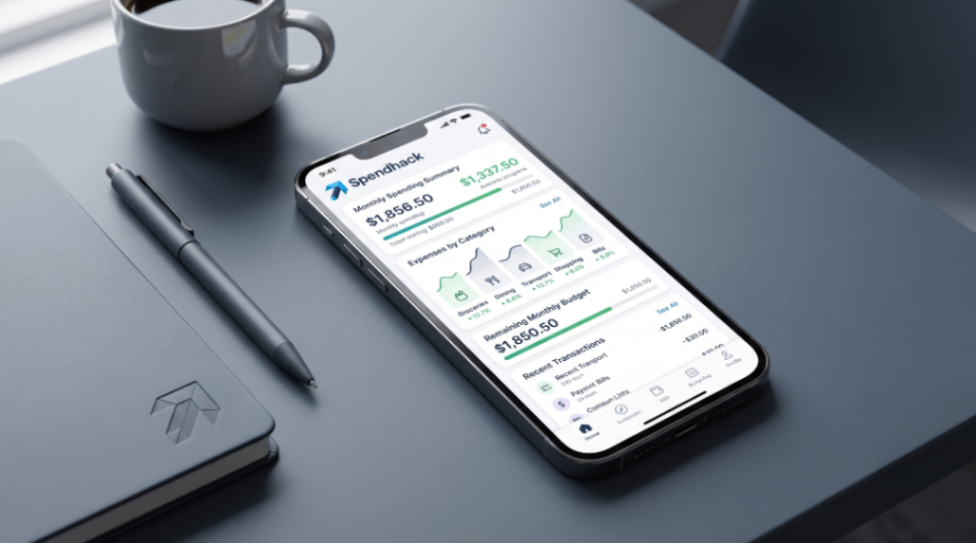
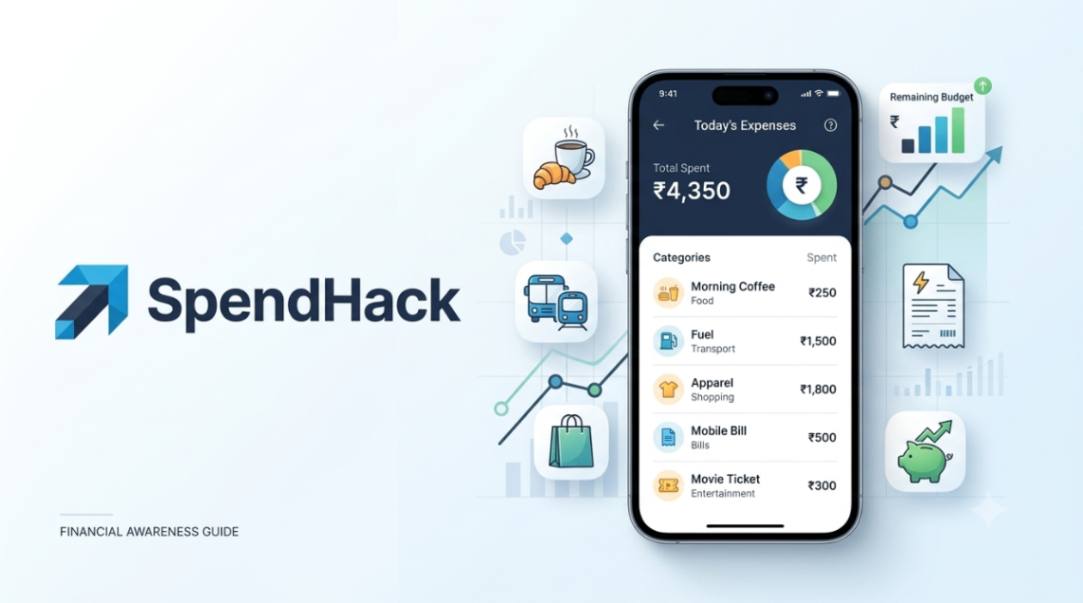
If you want a simple way to record and understand your spending, you can try SpendHack as your personal expense tracker.
The most important factor is not which method looks most sophisticated. It is whether the method makes it easy enough for you to keep tracking your expenses consistently.
Example of Daily Expense Tracking
Imagine someone receives a monthly income of ₹50,000. During one day, they spend:
| Purchase | Category | Amount |
|---|---|---|
| Breakfast | Food | ₹120 |
| Transportation | Transport | ₹100 |
| Lunch | Food | ₹250 |
| Mobile subscription | Utilities | ₹300 |
| Evening snack | Food | ₹100 |
The total for this example day is ₹870.
At first glance, ₹870 might not look significant compared with a monthly income. But if similar spending patterns continue, the total can become substantial over several weeks.
More importantly, categorization reveals that ₹470 of the day's spending went toward food. That information becomes useful when you compare it with your weekly or monthly spending.
This is the real value of expense tracking: individual transactions become patterns that you can actually act on.
Common Expense-Tracking Mistakes
1. Tracking only large purchases
Large purchases are easy to remember, but small recurring expenses can also have a major impact over time. Try to capture everything that contributes to your spending.
2. Waiting until the end of the week
Delaying expense tracking makes it easier to forget transactions. Recording purchases close to the time they happen is usually more reliable.
3. Creating too many categories
A complicated category system can make tracking feel like work. Start simple and add categories only when they provide useful information.
4. Tracking expenses without reviewing them
Recording hundreds of transactions does not automatically improve your finances. The important part is reviewing the information and using it to make decisions.
5. Forgetting cash spending
People often remember card or digital transactions because they appear in an account history. Cash purchases can be easier to forget, so make a deliberate effort to record them.
6. Giving up after missing a day
Missing one or two transactions does not mean your entire system has failed. Correct what you can and continue tracking from the next purchase.
7. Using tracking as a reason to feel guilty
The purpose of tracking is not to make every purchase feel like a mistake. It is to give you information so you can decide where your money should go.
Turn Your Expense Data Into a Budget
Expense tracking and budgeting work best together.
Tracking tells you what actually happened. A budget helps you decide what you want to happen next.
After tracking your expenses for a few weeks or a full month, look at your average spending in each category.
Then ask:
- Which expenses are essential?
- Which categories are consuming more money than expected?
- Which expenses can be reduced?
- Which recurring subscriptions are still useful?
- How much can realistically be saved?
- Are there irregular expenses that should be planned for?
You can then create a realistic monthly budget based on your actual spending rather than an idealized estimate.
A budget created from real historical data is often easier to follow because it reflects your actual lifestyle.
How Often Should You Review Your Expenses?
A simple routine works well for most people.
Every day
Record new transactions and quickly check whether anything was missed.
Every week
Review category totals and look for unusual spending or patterns.
Every month
Compare actual spending with your budget, evaluate your progress, and make adjustments for the following month.
This creates a simple cycle:
Track → Review → Understand → Adjust → Repeat.
Over time, this process can make your financial decisions more deliberate because you are working with your own spending history.
Using SpendHack to Track Your Spending
If you want to make daily expense tracking easier, a dedicated expense-tracking tool can keep your transactions organized in one place.
SpendHack is designed around personal expense tracking and budgeting, helping you keep a clearer view of your spending instead of relying on scattered notes or memory.
The goal is simple: make it easier to record your expenses, understand your spending patterns, and make more informed budgeting decisions.
If you are starting to track your expenses for the first time, begin with a simple habit: record every purchase today. Do not worry about building a perfect financial system on day one. Consistency is more valuable than complexity.
Frequently Asked Questions
What is the easiest way to track daily expenses?
The easiest method is the one you can use consistently. A notebook, spreadsheet, or dedicated expense tracker can all work. Record the date, amount, category, and a short description for each purchase.
Should I track every expense?
For the most accurate picture of your spending, it is useful to track both large and small purchases. Small recurring expenses can add up and may otherwise be overlooked.
How long should I track my expenses?
You can start seeing useful patterns after a few weeks, but maintaining the habit over several months gives you a much stronger picture of your spending behavior and recurring expenses.
What categories should I use for expense tracking?
Start with broad categories such as housing, food, transportation, utilities, shopping, entertainment, healthcare, education, subscriptions, and other expenses. Add more detail only when it helps you make better decisions.
Is an expense tracker better than a spreadsheet?
It depends on your preferences. A spreadsheet provides flexibility and control, while a dedicated expense tracker can make recording, categorizing, reviewing, and organizing spending more convenient. Choose the system you are most likely to maintain.
Can tracking expenses help me save money?
Tracking expenses does not automatically save money, but it can reveal spending patterns and areas where you may be able to reduce costs. That information can make it easier to create a realistic budget and set savings goals.
Should I track cash expenses?
Yes. If you want an accurate picture of your spending, cash purchases should be included alongside card and digital transactions.
What should I do if I forget to record an expense?
Record it when you remember. Do not abandon your tracking system because of a missed transaction. The objective is to build a useful long-term record, not to create a perfect record every single day.
Final Thoughts
Learning how to track your daily expenses is one of the simplest ways to become more aware of your financial habits.
You do not need to track your money perfectly. Start by recording every purchase, organize your spending into a few meaningful categories, review your expenses regularly, and use what you learn to create a more realistic budget.
The biggest benefit comes from consistency. After a few weeks, individual transactions begin to turn into useful patterns. Those patterns can show you where your money is going, which expenses deserve attention, and where your budget may need adjustment.
Start small. Track today's expenses. Review them tonight. Then do the same tomorrow.